


Armillary Sphere
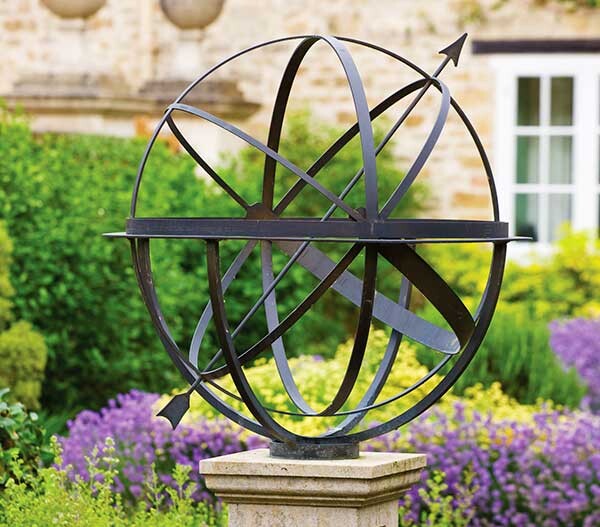
David Harber’s fascination with space and the solar system inspired him to create the astronomically intriguing Armillary Sphere.
It is one of David Harber’s earliest and most appreciated works, enjoyed throughout the world in a variety of settings. As well as being a fully functioning sundial, this handmade piece is calculated to a specific location, making it a highly accurate timepiece.
Variations & finishes
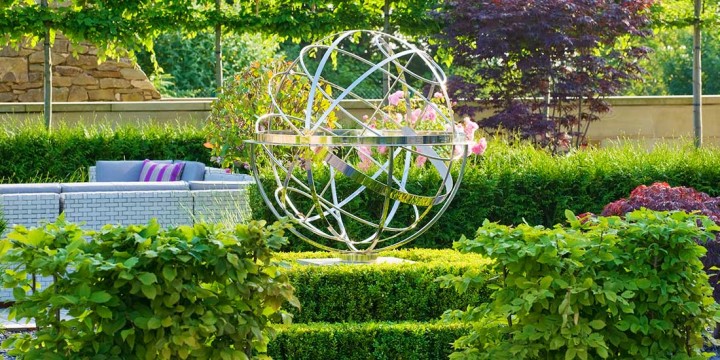
1. Stainless Steel
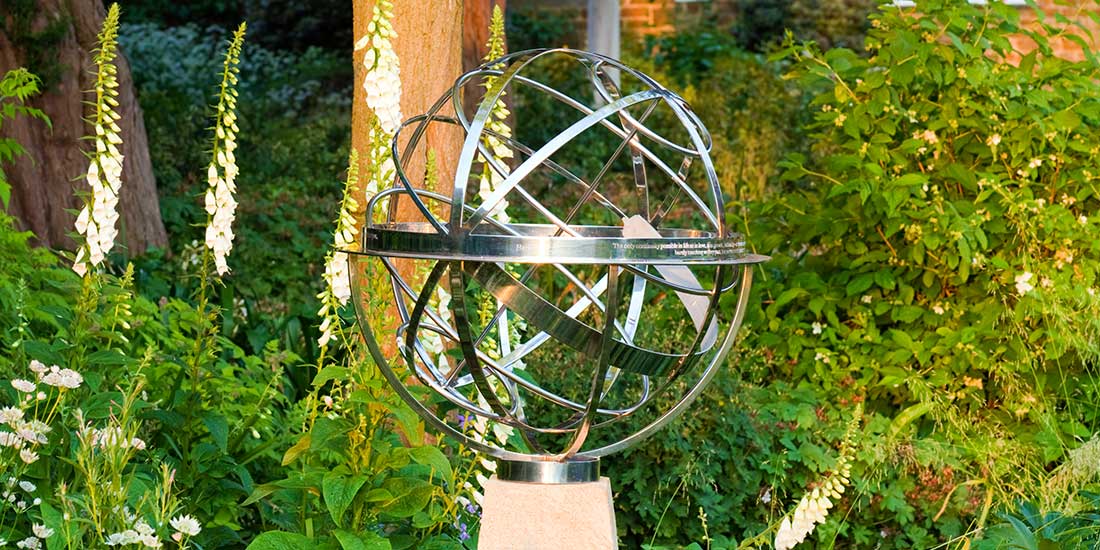
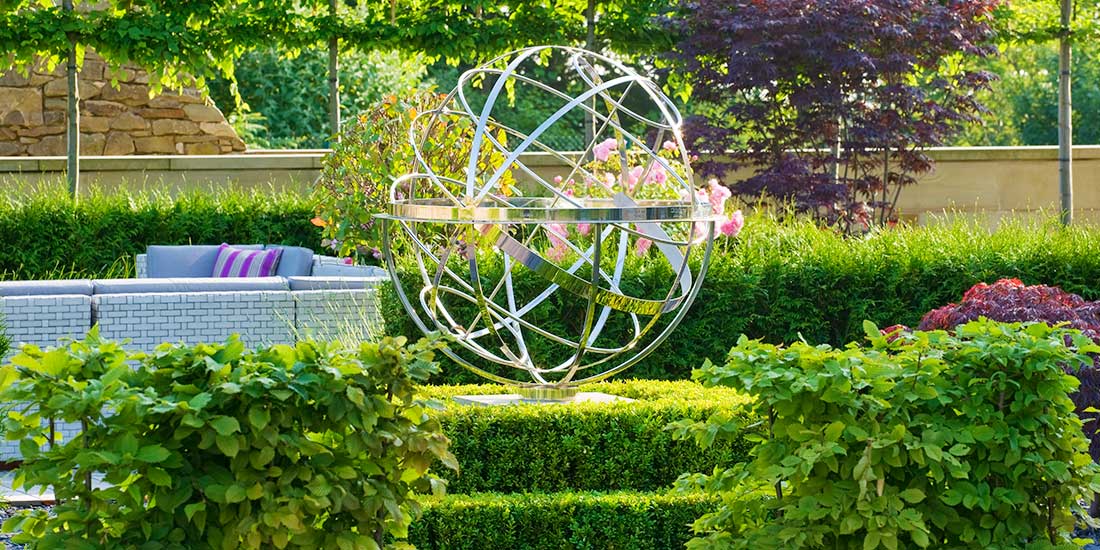
Mirror-polished stainless steel

2. Bronze
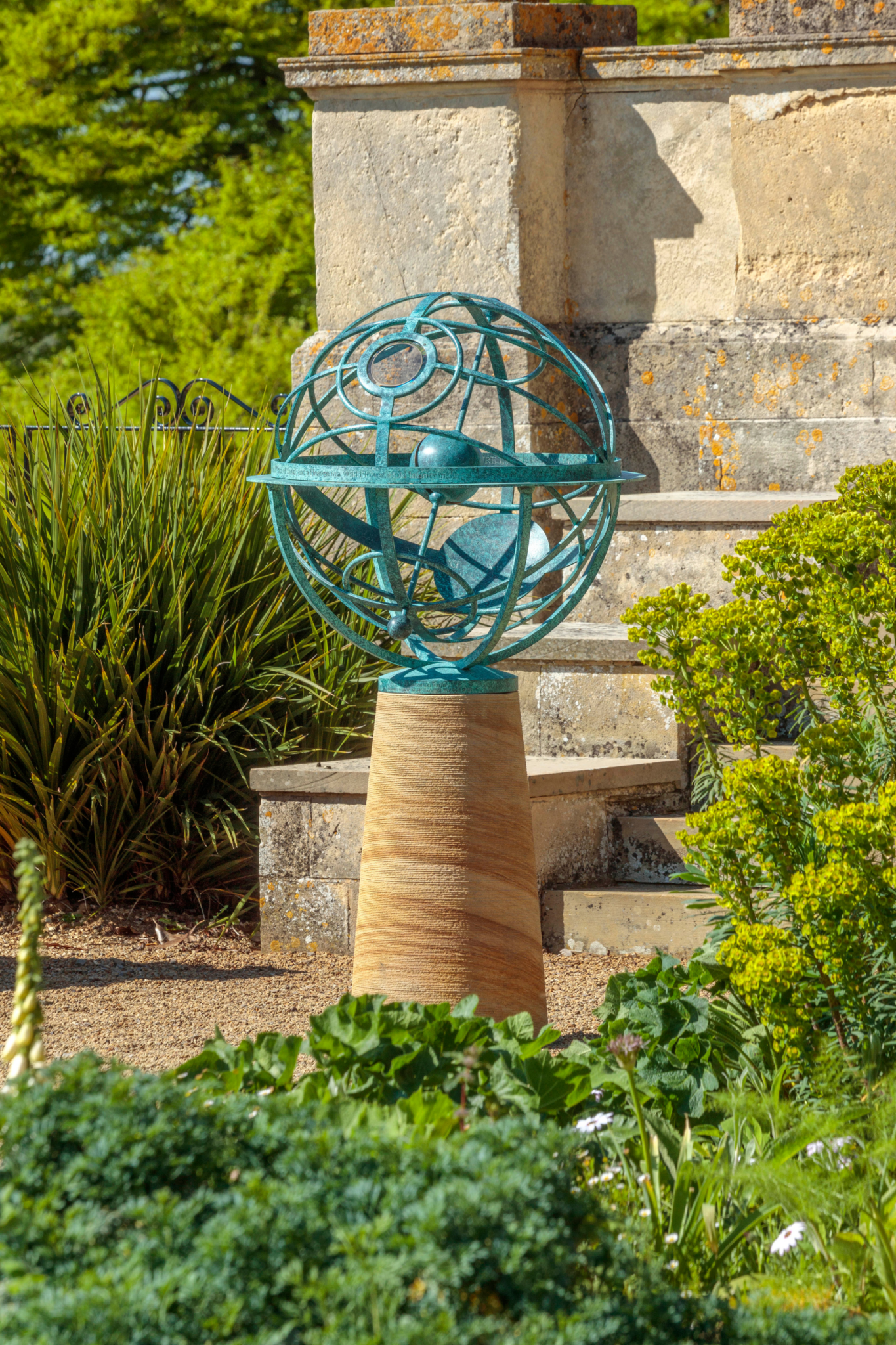
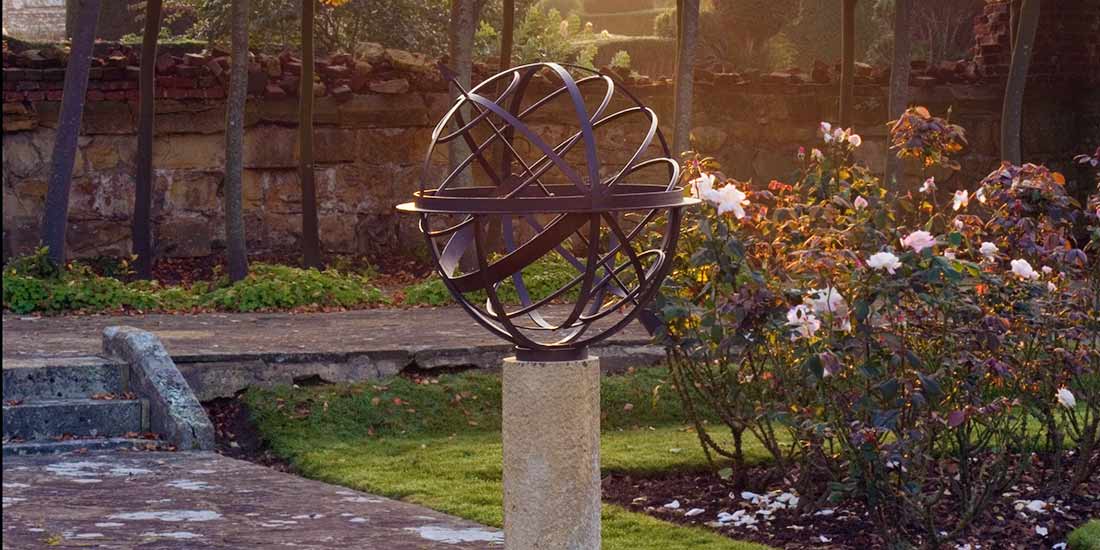
Bronze verdigris patina
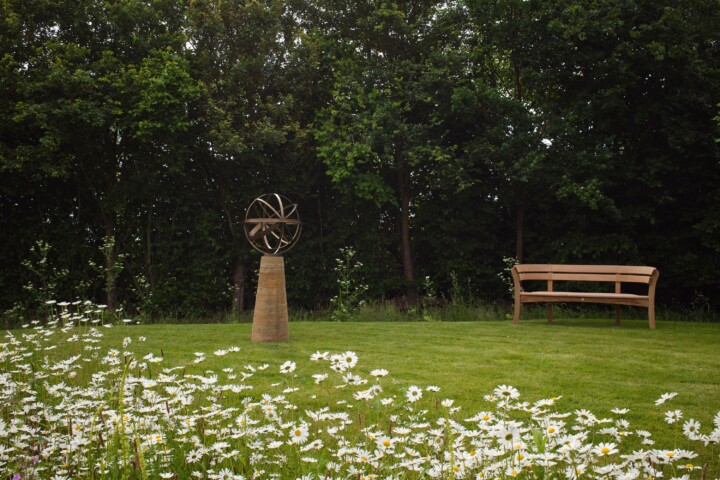
3. Brass
Brass antique patina
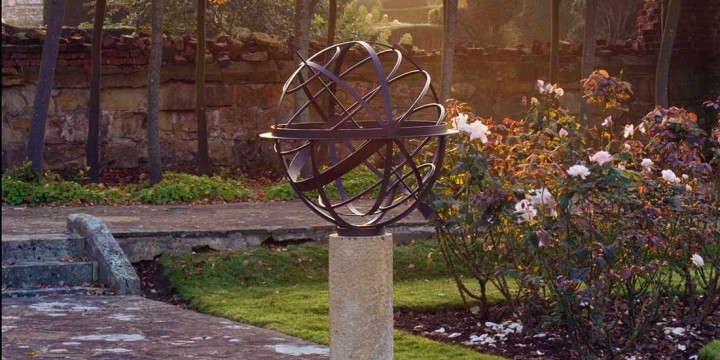
4. Antique Bronze
Bronze with antique tan patina
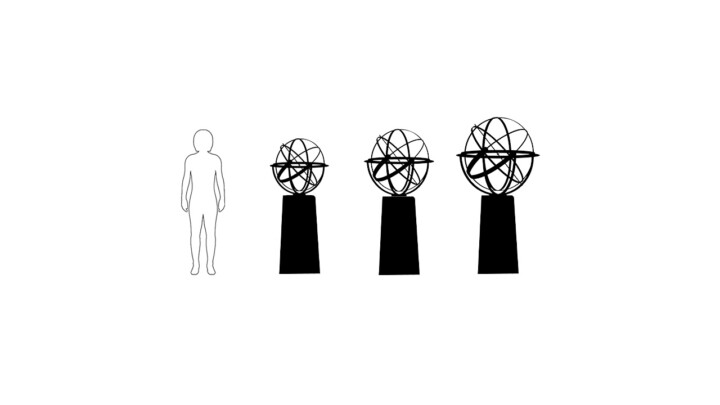
The Armillary Sphere sundial is available in three sizes with larger sizes available on request.
Dimensions
The Armillary Sphere is available in 27 inches, 31 inches or 35 inches diameter. Larger sizes are available on request.
Finishes and colours
The Armillary Sphere can be made from bronze (either antique tan or with a Verdigris patina applied), marine grade mirror-polished stainless steel or brass.
Model scale
27 inches, 31 inches or 35 inches diameter
(Model scale: 71 inches)
Design details
“Our Armillary Sphere looks completely fabulous and we could not be more thrilled. You did a wonderful job installing it and it has already been much admired.”
Berkshire, England
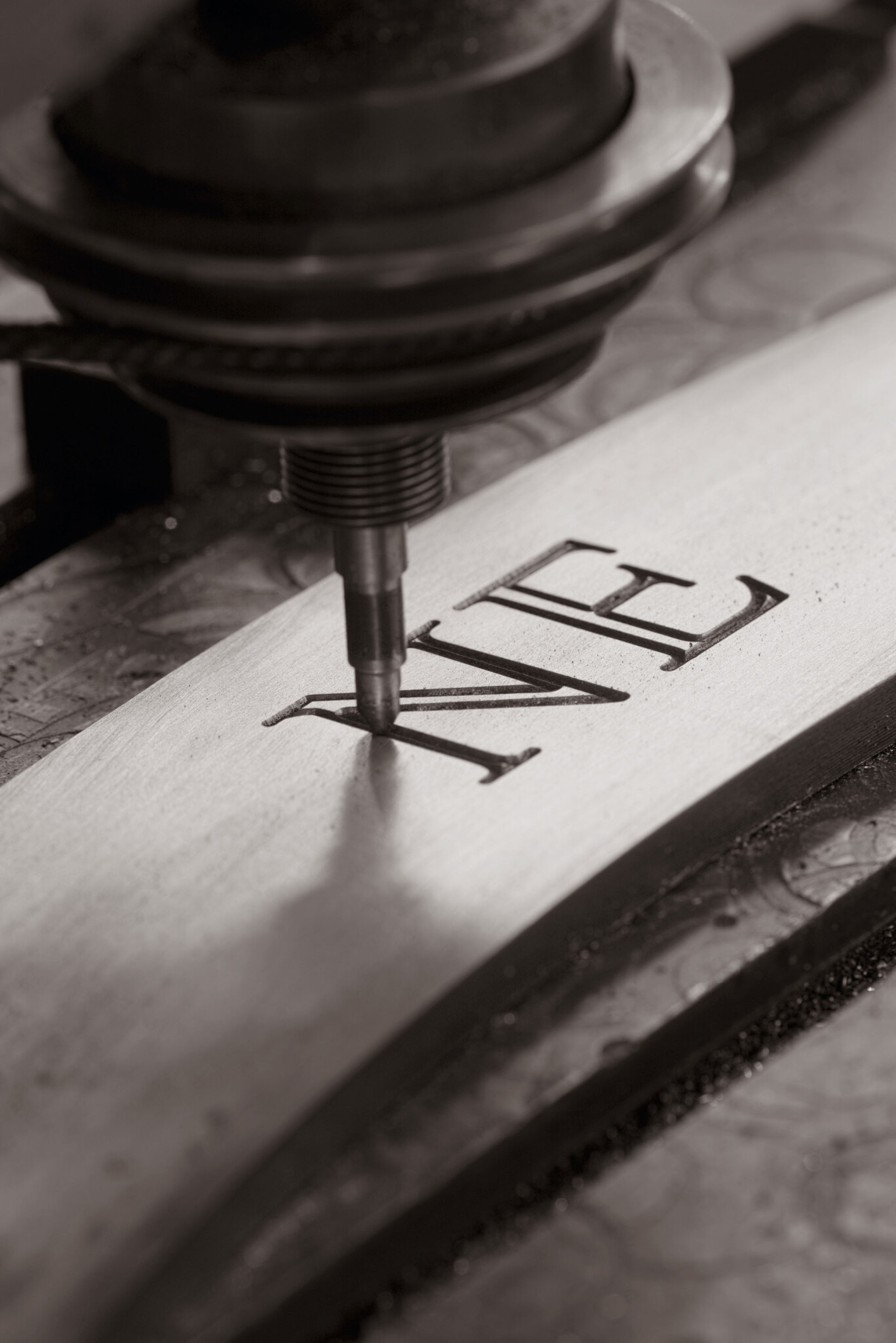
Every Armillary is unique and tailored to you. It’s made for your exact latitude and longitude to ensure accuracy, whether you want it installed in a city space in London, a Mediterranean garden in Europe, or a contemporary landscape in Australia. You can also choose to have it personally engraved.

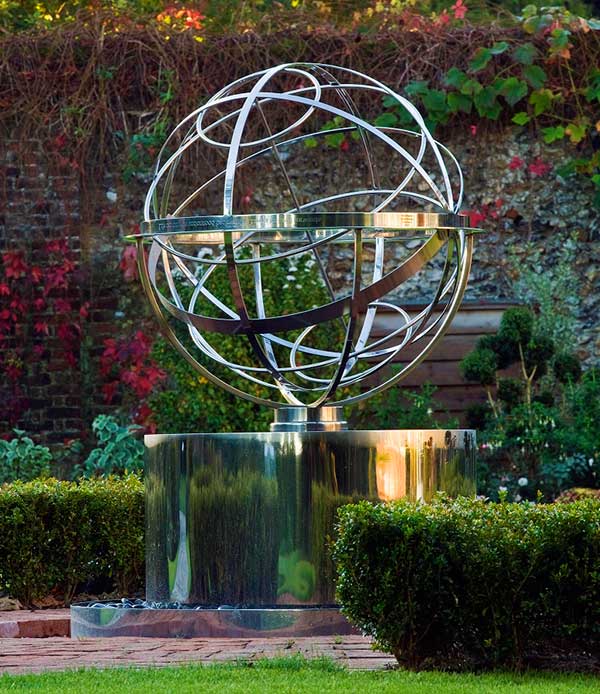
David Harber’s fascination with the history of science, space and the solar system inspired him to create the astronomically intriguing Armillary Sphere. Originally invented by the Greeks, the Armillary Sphere was used to observe the great circles of the heavens, calculate the sun’s movements and predict ecliptic events.
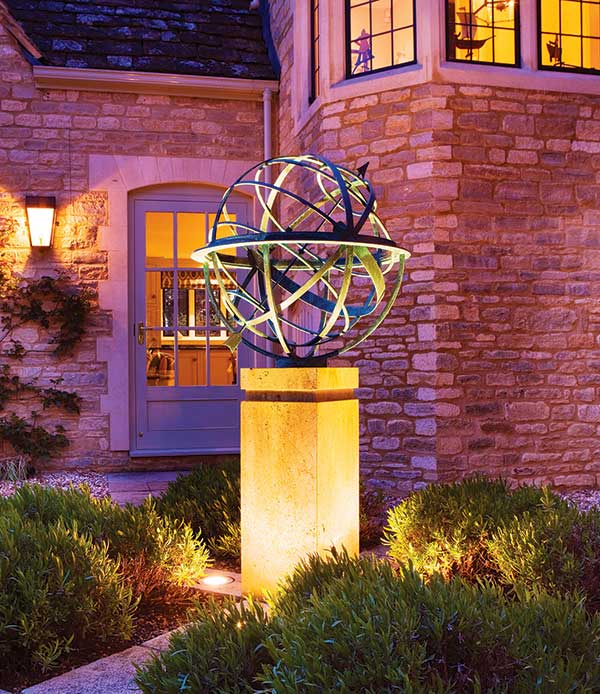
Bronze
As well as being strong and highly durable, a bronze verdigris patina on an Armillary sundial gives the impression of timelessness.
Additional embellishments, such as extra rings marking the Tropics of Cancer and Capricorn, the North and South Polar Circles, a calendar showing the progression of the months, and an arrowhead and tail, can be incorporated.
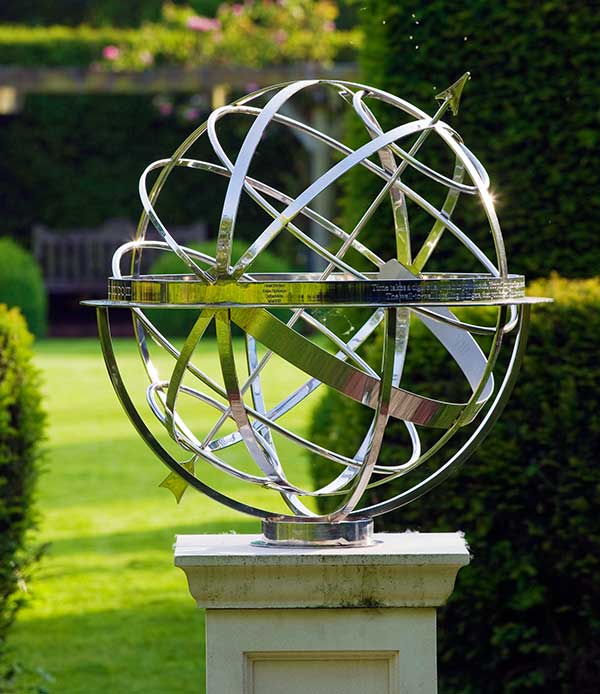
Stainless Steel
Made from marine-grade stainless steel, these Armillary Spheres are mirror-polished to ensure high visibility and lifelong brilliance.
Additional features, such as a calendar, extra rings, or an arrowhead and tail, can be added to this celestial sphere to create more functionality.
Brass
A lighter material than bronze, brass has a real sense of weight and a patina that matures well and darkens with age. It will look equally at home in a traditional English garden or in a more contemporary outdoor space.
The classic features of the astronomical instrument: a calendar, an arrowhead and tail and more, can be added to brass Armillary Spheres.
Sundials are about time and place, the people that commission them and the sentiment they convey. They can be shared with future generations as heirlooms, a message to pass down through the ages.
Product information
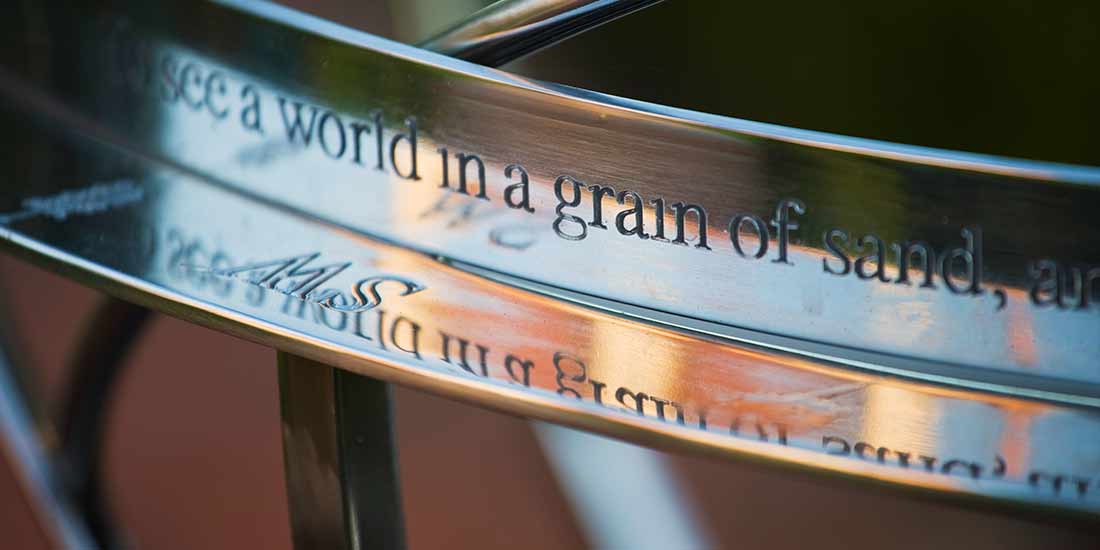
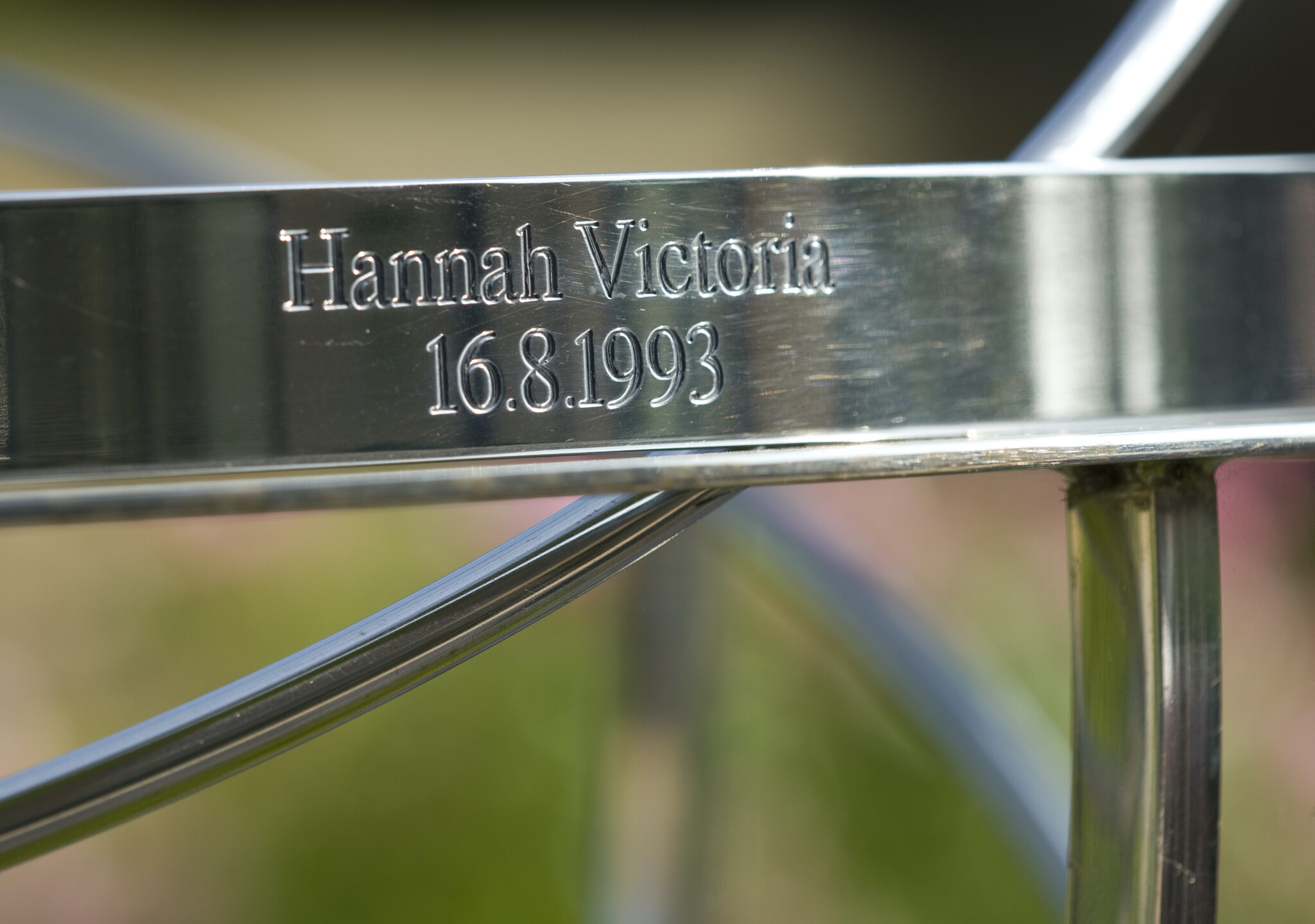
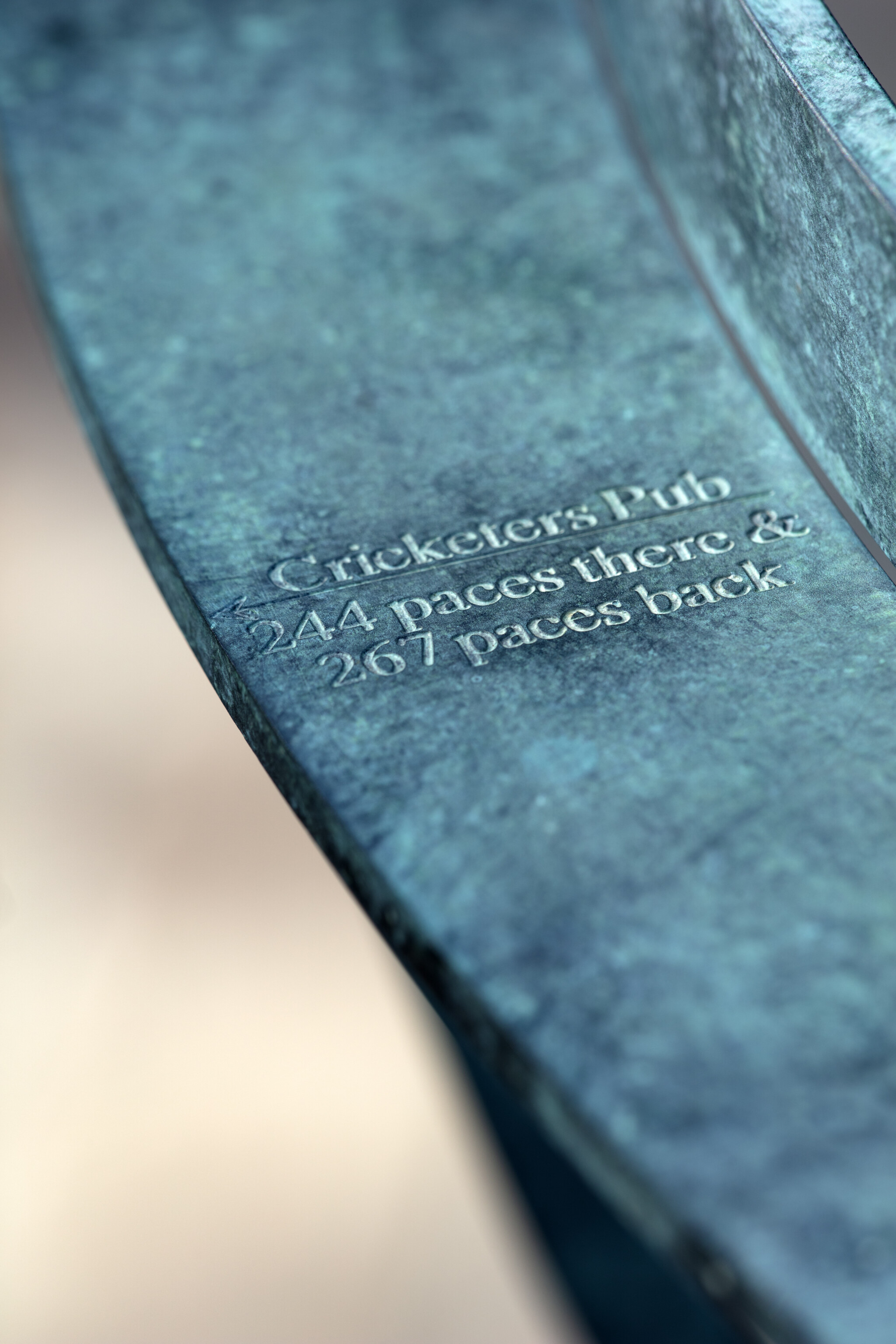
As well as marking the equinoxes, a personalized sundial makes a beautiful gift to mark an important anniversary or memorialize someone special. Dials can be engraved with words and phrases that have personal resonance, such as mottos and quotations; family names and dates of birth; commissioning statements; house names with latitude and longitude; and the distances and direction to locations significant to the client.
The sphere has an equatorial band and can have rings representing the Tropics of Cancer and Capricorn, and the Polar Circle. An arrowhead and tail and a calendar band can be included to highlight a memorable date of the year.
To work as a functioning timepiece, Armillary Sphere should be in a position that benefits from direct sunlight for as much of the day as possible. If it is not being fixed to an existing pedestal and the David Harber team are supplying one, the client must provide a suitably level concrete pad foundation to which the pedestal can be fixed. The sphere is fixed to the pedestal with a resin-fixed bolt and then aligned for it to read the correct time. Alignment requires sunlight – in its absence, clear instructions will be provided.
We offer a small selection of stone pedestal options at an additional cost, although these can also be sourced separately should a local stone, for example, be required.
Shipping quotes can be obtained and charged at cost.
David Harber Armillary Spheres are neither lacquered nor coated. To clean them, we would suggest the use of warm water and a soft cloth. We do not recommend the use of metal cleaner as this may scratch and dull the surface. The stainless-steel variant can be best cleaned with glass cleaner and a soft lint-free cloth. Maintenance instructions will be issued on installation.
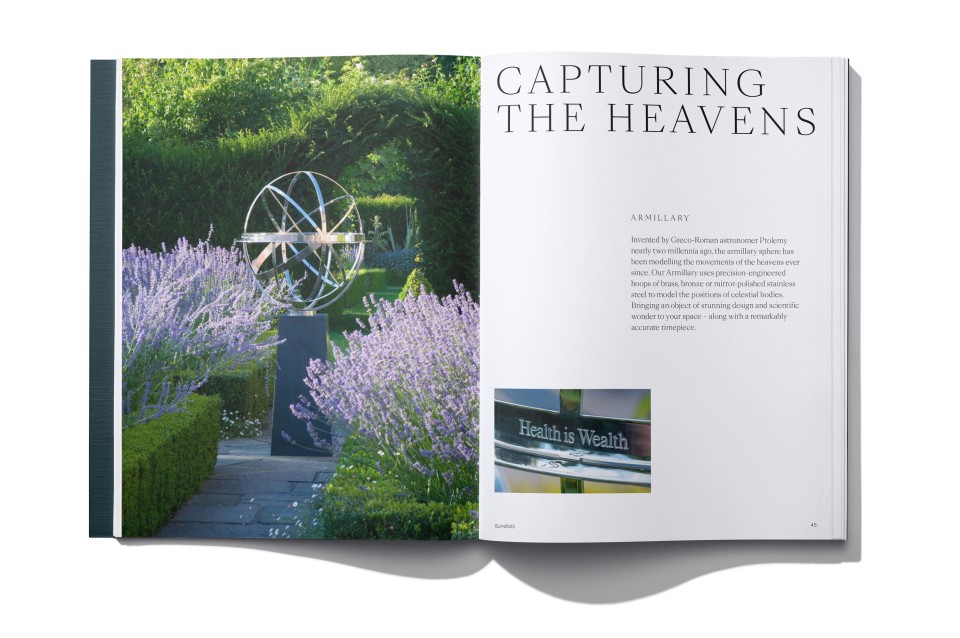
An armillary sphere brings pleasure to the passing of time. We use precision-engineered hoops of brass, bronze or mirror-polished stainless steel to model the positions of celestial bodies.
An armillary sphere tracks solar time accurately throughout the year, but it has to be calculated to a specific location to work.
Although originally an instument to aid humanity’s attempt to understand the heavens, the armillary sphere in a modern setting symbolizes the inescapable passing of time and connecting more deeply to the changing of seasons throughout the year.
Derived from the Latin word armilla, which means ‘bracelet’ or ‘ring’. Together with the word ‘sphere’ armillary sphere translates to circle of rings.
Originally devised in ancient Greece by the Greek philosopher astronomer, Ptolemy, it was designed to represent the geometry of the celestial bodies using a system of interlocking equatorial rings, each aligned with important celestial circles such as the Equator, Ecliptic, and Meridians. To learn more about the history of armillary spheres, read Architecture of Time: An Introduction to Armillary Sphere Sundials.
A series of rings, called armillaries, mark the movements of the sun on the celestial sphere as it crosses the Earth, at any time of year. We set our Armillary Spheres to your exact geographical location to ensure an accurate reading. You can also add personalized dates or anniversaries to mark important memories or remember loved ones.
For more comprehensive knowledge on the topic, this article explains how to read a sundial in detail.
To work as a functioning timepiece, Armillary Sphere should be in a position that benefits from direct sunlight for as much of the day as possible. If it is not being fixed to an existing pedestal and the David Harber team is supplying one, you will need to provide a suitably level concrete pad foundation to which the pedestal can be fixed. Next, Armillary Sphere is fixed to the pedestal with a resin-fixed bolt and then aligned so that it reads the correct time. Alignment requires sunlight – in its absence, clear instructions will be provided.
A sundial consists of a flat surface, known as the dial plate, marked with hour lines, sometimes accompanied by roman numerals, and a raised arm or stick called the gnomon, which casts a shadow across the dial as the sun moves across the sky.
The placement and angle of the gnomon are calculated using longitude and latitude to align with the Earth’s axis, allowing the sundial to track solar time accurately throughout the year for its exact location. Learn how to read a sundial here.
All David Harber Armillary Spheres are custom by design as each timepiece is crafted and calculated to a specific location and there are several material variations to choose from, as well as the option to engrave your design. Our dial collection also includes more intricate models of the universe such as Orrery. Within this bronze armillary sphere, a powered mechanism demonstrates the movement of the planets in the solar system, scaled up to show a whole year in a single day.
The magic of conversation
Whether you’ve decided on a piece or you just want to sound out an aspect of our work, please get in touch with our team to discuss your needs.
You may also like